Not long ago, gaming was treated as a niche pastime — something teenagers did in darkened bedrooms, a hobby that barely warranted serious cultural conversation. That framing has aged poorly. Today, gaming is one of the most consumed forms of entertainment on the planet, generating more revenue than film and music combined, with player communities that span every continent, age group, and background. The culture that has grown around it is equally vast, varied, and genuinely fascinating to examine.
From Subculture to Mainstream
The shift didn't happen overnight. It accumulated across decades of technological change, shifting demographics, and the gradual normalisation of digital leisure. Early gaming culture in the late 1970s and 80s was shaped by arcade cabinets and the first wave of home consoles. The players were predominantly young, predominantly male, and the social scene around games was physical — you gathered at arcades, competed at local tournaments, swapped tips on school playgrounds.
The internet changed everything. Online multiplayer, beginning in earnest in the late 1990s with titles like Quake and StarCraft, allowed players to connect across distances and form communities built not around geography but around shared interest. Forums, fan sites, early Discord predecessors like IRC channels — these became the infrastructure of gaming culture's first truly global era.
By the mid-2010s, the cultural mainstream had largely caught up. Streaming platforms like Twitch and YouTube Gaming turned playing video games into a spectator sport with audiences rivalling traditional broadcasting. Esports tournaments filled football stadiums. Gaming references entered advertising, film, television, and fashion. The subculture had become, in many respects, just culture.
The Social Architecture of Online Gaming
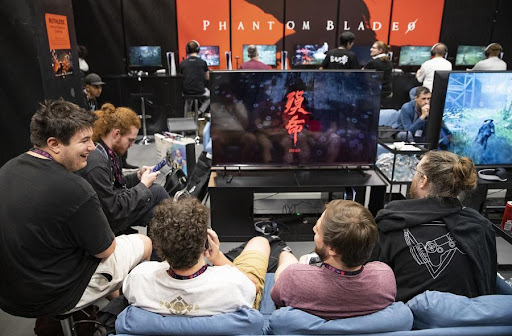
What makes online gaming communities distinctive is the way social bonds form within them. Unlike social media platforms — where connection is often passive and performative — multiplayer games require active collaboration, coordination, and sometimes real-time communication under pressure. Friendships formed in raids, guilds, or competitive squads often carry a depth that's hard to replicate in more casual digital spaces.
This has been observed in academic research as well as anecdotally. Studies on massively multiplayer online games like World of Warcraft found that players routinely reported their in-game friendships as among their most meaningful social connections. The shared challenge, the common vocabulary, the hours invested in a shared goal — these are conditions that tend to generate genuine attachment.
Online gaming has also provided community access for people who, for various reasons, struggle with social connection in physical spaces. Those with social anxiety, mobility limitations, or who live in isolated areas have consistently reported that gaming communities offered them something harder to find elsewhere: a sense of belonging on their own terms.
"Games are not an escape from life. For many players, they are life — a space where identity, skill, and community intersect in ways the physical world doesn't always permit."
Identity and Expression in Digital Spaces
The relationship between gaming and personal identity is complex and worth examining honestly. For some players, games are simply entertainment — enjoyable ways to pass time without deeper significance. For others, gaming forms a meaningful part of how they understand themselves. Their skill, their tastes, their community affiliations — these carry real social weight.
Character customisation, role-playing elements, and the simple act of choosing which games to play can all become expressions of identity. The rise of indie games in particular has expanded what kinds of stories and experiences games can tell, allowing players to find reflections of their own lives and perspectives in ways that mainstream titles historically couldn't provide.
Representation in gaming has improved significantly, albeit unevenly. More games feature diverse protagonists, more nuanced storytelling, and a broader awareness of audience. The cultural conversation around these changes has sometimes been fractious, but the direction of travel is largely towards greater inclusivity — not just in content, but in who considers themselves a gamer at all.
Esports and the Spectator Economy
The emergence of esports as a legitimate spectator pursuit has been one of the more surprising developments in recent cultural history. Competitive gaming at the highest level now involves professional players with agents, dedicated training regimens, sports psychologists, and salaries that would not look out of place in professional football. Teams have brand identities, fan bases, and corporate sponsors. Major tournaments offer prize pools that rival traditional sporting events.
What drives viewership of esports isn't fundamentally different from what drives viewership of any sport: the appeal of watching highly skilled performers compete under meaningful stakes. The drama of a close match, the charisma of individual players, the narrative arcs of teams rising and falling — these dynamics translate across any discipline where skill and competition intersect.
Broadcasting esports has also developed its own vocabulary. Commentators and analysts bring a layer of expertise that helps viewers understand what they're watching. Platforms stream not just matches but surrounding content — player interviews, behind-the-scenes footage, analysis shows — building the kind of rich media ecosystem that established sports have developed over decades.
The Cultural Conversation Gaming Demands
No honest account of gaming culture can ignore its more contested dimensions. Online gaming spaces have at times been hostile environments, particularly for women, LGBTQ+ players, and racial minorities. Harassment, abuse, and coordinated exclusion have been documented extensively, and the gaming industry has been slow in some respects to address these issues systematically.
The relationship between violent content in games and real-world behaviour remains a perennial subject of debate, though the weight of research evidence does not support strong causal claims. More nuanced concerns — around addictive design patterns, loot boxes, predatory monetisation, and time displacement — represent genuine issues that deserve serious examination without moral panic.
Platform companies, developers, and communities are increasingly engaging with these questions. Community moderation tools, mental health resources integrated into gaming platforms, design changes aimed at reducing compulsive engagement mechanics — these suggest an industry beginning to take responsibility for its social footprint, even if progress is uneven.
Gaming as Cultural Artefact
Perhaps the most significant marker of gaming's cultural maturation is its growing recognition as an art form. Games like Journey, The Last of Us, Disco Elysium, and What Remains of Edith Finch have demonstrated that the medium can produce work of genuine literary, visual, and emotional ambition. Institutions like the Victoria and Albert Museum have begun collecting games as cultural objects. Game music fills concert halls.
This recognition matters because it changes the terms of the conversation. When gaming is treated purely as an entertainment product or a social concern, it invites a certain kind of reductive analysis. When it is understood as a medium capable of artistic expression — one with its own formal properties, histories, and canons — it can be engaged with on more productive terms.
The cultural weight of gaming will only grow. The generations currently entering adulthood have grown up with games as a primary medium of storytelling, social connection, and cultural reference. How those generations shape institutions, creative industries, and public discourse will bear the influence of their gaming lives in ways we are only beginning to understand.
Looking Forward
Gaming culture at this moment is characterised by its contradictions. It is simultaneously more inclusive and more fractious than ever. It produces sophisticated artistic works and mass-market products built on exploitative mechanics. It builds genuine community and amplifies harassment. It is mainstream enough to appear in prime-time advertising and niche enough to sustain thousands of micro-communities invisible to casual observers.
That complexity is, in its way, a sign of maturity. Simple cultural phenomena don't sustain this kind of variation and tension. Gaming culture is messy because it's large, because it matters, because real stakes — social, commercial, artistic, personal — are involved. Engaging with it seriously means sitting with that complexity rather than flattening it into either celebration or alarm.
For those who play, the culture is simply part of how they experience something they love. For everyone else, it's worth paying attention — not because gaming is strange or threatening, but because it has become one of the central places where our era's ideas about identity, community, competition, and creativity are being worked out in real time.